
Leadership
-
Lollapalooza effects
The term lollapalooza effects/results was popularised by late Charlie Munger to describe the exponentiallly amplified outcomes when couple of forces/factors which might be mild, act in the same direction. Financial markets are the prime example for lollapalooza effect where bubbles and bursts may look sudden but these are because of the impact of many small… Continue reading
-
Future of Leadership

Leadership will continue to be about “enabling others to achieve the right results.”. Well, at least for true leaders. However, in the not-so-distant future, those “others” may not just be people — they may also be machines. This is an interesting thought experiment. While the leaders who believe in empowering their people will find it… Continue reading
-
Something I’m pondering!

The same people with same intelligence have wildly different potential under different circumstances. However, too little attention is given to the circumstances. A leader’s job is to create right circumstances for the people to achieve their potential. Continue reading
-
Hold onto the fishing pole!
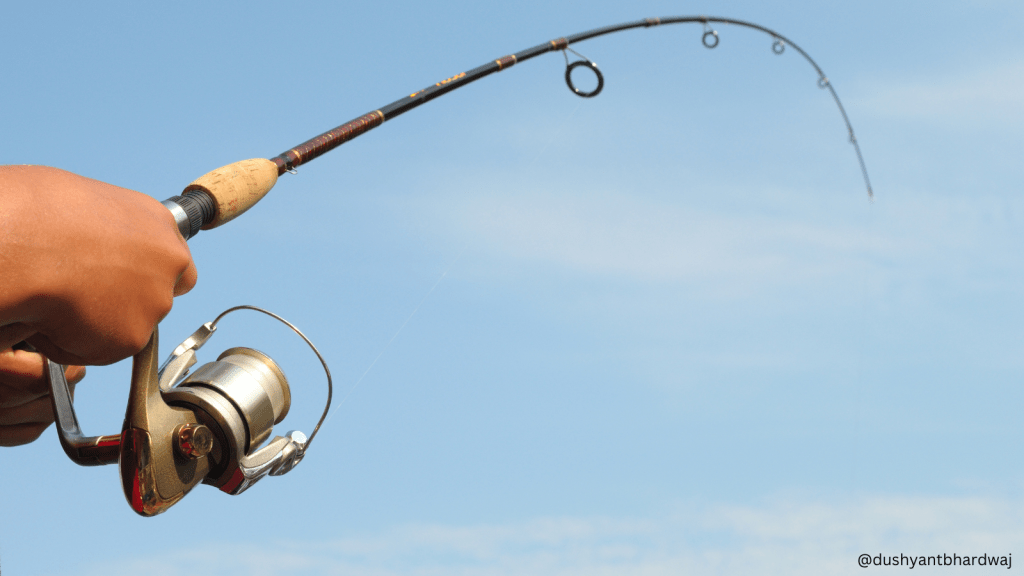
Ryan Hawk described an interesting story from his interview with John Chambers, CEO of Cisco Systems. John shared an old memory from his childhood when he was six. John went for fishing with his father. He went too close to the water and fell into the river. Even though John was a good swimmer, the… Continue reading
-
Innovation: Asking the right questions!

Sometime innovation could be as simple as asking right questions. As the book, Innovator’s DNA describes, one of the key innovations in the Apple II, the computer that launched Apple, came from Jobs’ decision that it should be quiet. His conviction came from meditation he learned during his tour in India. He found the noise… Continue reading
-
Consistency

The consistency of your endeavors is more important than the quantity. Doing big things occasionally is overrated. Doing small things done every day is underrated. Continue reading
-
Craftsman & Artist

Rick Rubin writes in ‘The Creative Act’- If you know what you want to do and you do it, that’s the work of a craftsman. If you begin with a question and use it to guide an adventure of discovery, that’s the work of the artist. Being open to possibility gets you to a place… Continue reading
-
MacGyver Principle
MacGyver principle, named after a fictional character from a 1980’s American television show, refers to the ability to improvise and find creative solutions to problems with limited resources. It suggests to look around and see what you can build using found objects in the environment. You can extend this further to communicate your message for… Continue reading
-
Upstream
Too often, we get bogged down in solving a series of problems without taking a step back and think the source of problems. Author Dan Heath beautifully captures this in his book ‘Upstream’. You and your friend are having a picnic by the side of a river. Suddenly you hear a shout from the direction… Continue reading
-
Questions?
In the word question, there is a beautiful word—quest.I love that word. —ELIE WIESEL Picasso once said, “There is only one way to see things until someone shows us how to look at them with different eyes.” In a way asking a different question. “The important and difficult job is never to find the right… Continue reading
 Thinking Space